

OUR IDEAL

The roots of our vocation
The Carmelite Friars of the Divine Mercy belong to a religious family endowed with its own special charism in God’s people and called to fulfill a specific role in the Mystical Body of Christ. Each of us receives a personal call to this family. As a renewed form of an ancient order it entails both fidelity to the spirit and traditions of Carmel and a continual striving after renewal. This is--as it were--the dual heritage bequeathed to us by our Holy Mother St Teresa. Mindful of this and docile to the voice of God, we cherish the spirit and way of life of our forerunners as we profess to be their descendants and heirs. Hence we regard the deeds of our ‘holy fathers and predecessors’ not as lifeless events of bygone days but as part of the providential shaping of our vocation in the living Church.
The beginnings of the Order, the title ‘Brothers the Blessed Virgin Mary of Mount Carmel’, and the earliest authentic spiritual traditions provide ample evidence of the Marian and biblical character of our vocation. Taking Mary as the mother and patroness of the Order, we look upon her life and her sharing in the mystery of Christ as a model of religious consecration.
Among venerable biblical figures, Elijah stands out as Carmel’s source of inspiration, as he contemplates the living God and burns with zeal for his glory. We look upon his prophetic charism as the prototype of our own vocation to ponder God’s word and proclaim it to the world.


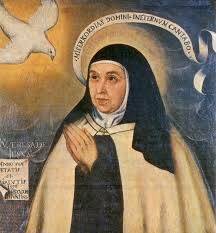
Charism of St. Therese of Avila
The charism of St. Teresa of Avila is a "living book" approach to friendship with Jesus through contemplative prayer, combining deep mystical intimacy with active apostolic zeal. Her legacy, which defines the Discalced Carmelite order, emphasizes prayer as friendship with God, constant interior conversion, and a dedication to serving the Church.
Core Pillars of the Teresian Charism
Friendship with Jesus (Contemplative Prayer): Teresa viewed prayer as an intimate conversation with God, which she described as "recollection"—a deep inward journey to find God within oneself.
Apostolic Zeal and Mission: Her contemplative life was never isolated, but driven by a passion to save souls, particularly in response to the challenges facing the Church in her time.
Humanity and Joy: She famously warned, "May God protect me from gloomy saints," fostering a spirit of joy and community in her foundations.
A "Living Book": Teresa experienced the loss of her spiritual books due to the Inquisition and was told by Jesus that she would become a "living book" of spiritual insight.
Key Virtues and Foundations
Humility:
She defined this as walking in truth and acknowledging one's total dependence on God.
Detachment:
Cultivating an attitude that "God alone suffices" and that all earthly things are passing.
Love of Neighbor:
A practical, active charity within community life.
Courageous Service:
She was a reformer who founded numerous convents, focusing on poverty, obedience, and prayer.
Her spirituality offers a path of "little deaths and little resurrections," focusing on trust, transformation, and surrender to the Divine Mercy.
THE CARMELITE FRIARS OF THE DIVINE MERCY:
Our ideal finds a living expression in these two Saints and is clearly portrayed in their writings.
Their charism and the spiritual lifestyle they proposed to us – even their intimacy with God and the experience of things divine – are not just purely personal gifts of their own, but part of the heritage and vocation of the Order.
This is the grace that God in his merciful goodness graciously offers to every member of our Order. It is the Carmelite charism we must learn to appreciate, to cultivate and to develop according to the gifts given to each of us by the Holy Spirit.

We find our earliest ‘pattern of life’ outlined in the Rule of St Albert remaining basically as the rule that governs our life today.
This way of life, in its original eremitical form, was duly sanctioned and approved by the Church. Subsequently, the Order was granted mendicant status and entrusted with the apostolic ministry, but at the same time, urged to remain true to its original spirit.
(a) to live in allegiance to Jesus Christ, serving him with a pure heart and a good conscience, looking to Him alone for salvation, as we obey our superior in a spirit of faith, with our mind more on Christ than on the superior
(b) to ponder unceasingly the law of the Lord in the Scriptures and strengthen our hearts with holy thoughts, so that the word of God may be always in our hearts and on our lips and guide us in everything we do;
(c) to come together daily for the celebration of the sacred liturgy;
(d) to put on the armour of God, as we live an intense life of faith, hope and charity, in a spirit of evangelical self-denial and a generous commitment to work, after the example of Paul the Apostle;
(e) to enter into a genuine sharing of life, having at heart the good of the community and the salvation of souls, sustained by the charity of fraternal correction; to hold everything in common under the guidance of a superior placed at the service of his brothers;
(f) above all to lead a life of unceasing prayer in silence and solitude, in accordance with the gospel admonition to watch and pray;

(g) to use prudent discretion in all that we do, especially when this entails more than duty requires of us.
Principal elements of the way of life we profess as CARMELITES:

(a) We are committed to a consecrated life of allegiance to Jesus Christ. In this we are sustained the companionship, the example and protection of our Lady. Her life of union with Christ we regard as the prototype of ours.
(e) It is for this twofold service, contemplative and active, that we share life as brothers in the community. United by the bond of love in fraternal life, we also bear witness to the unity of the Church, faithful in this to our Holy Mother, who wanted her communities to resemble ‘the college of Christ’.
(b) Our vocation is a grace by which we are called to a ‘hidden union with God’ in a form of life and fraternal sharing in which contemplation and action are blended to become a single apostolic service of the Church.

(f) This way of life, based on the primitive Rule and the teaching of our Holy Parents, must be sustained by constant evangelical self-denial.
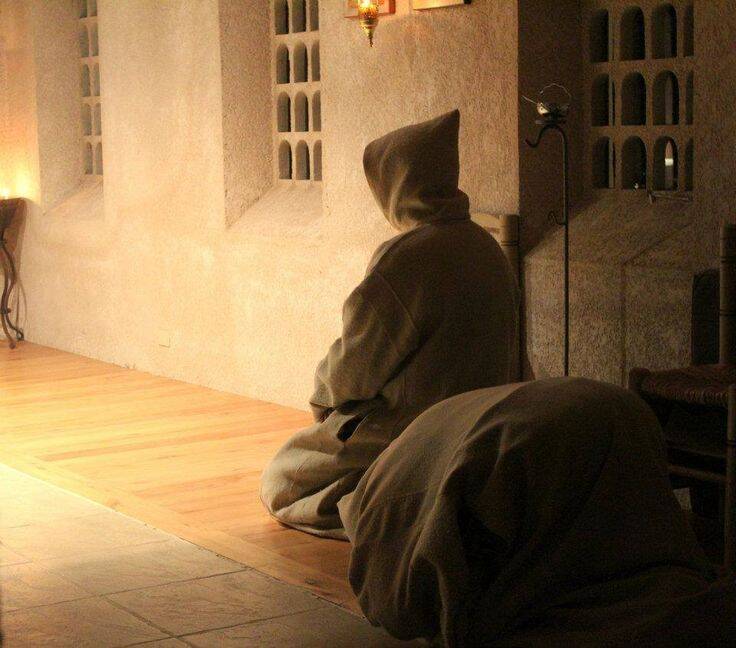
(c) This call to prayer embraces our whole life. Sustained by the word of God and the sacred liturgy, we are led to live in intimate friendship with God. By growing in faith, hope and above all charity, we deepen our prayer life. With our heart thus purified, we are enabled to share more closely in the life of Christ himself and prepare the way for a more abundant outpouring of the Holy Spirit. In this way, the Teresian charism and the original spirit of Carmel become a reality in our lives as we walk in the presence of the living God.

(d) The very nature of our charism demands that our prayer and our whole religious life be ardently apostolic, and that we put ourselves at the service of the Church and of all mankind. This must be done in such a way that ‘our apostolic activity stems from our close union with Christ’. Indeed we must aim at that most fruitful of all apostolates which derives from the ‘state of union with God’.
The Community of St. Elijah of the Carmelite Friars of the Divine Mercy were welcomed into the global family of faith that is the Reformed Catholic Church since the 14th of November of 2010 AD. At that moment, the friars were welcomed with all rights, privileges and responsibilities of this jurisdiction to the ministry of the RCC.
AM I BEING CALLED TO THE CARMELITE CONTEMPLATIVE WAY OF LIFE?
In a world of distraction and dispersion, modern man is distraught, thirsting for peace in a troubled world. The dream of humanity sufficing in itself by its enlightened thought and conscientious humanitarian charity has met the sad reality of mass ideological murder of the twentieth century and a rampant selfish individualism that has man saying with the Psalmist,
“What can bring us happiness?”
St Teresa of Avila, the Doctor of Prayer and reformer of the Carmelites, proposed a remedy for our times to discover this interior peace in order to work toward peace in the world. She invites us to look to the person of Jesus Christ in order to discover our dignity and destiny in him: that we are all made in the “image and likeness” of God and we are all destined for eternal glory. Teresa realized that we are all capable and called to be contemplatives.
As St. Augustine exclaimed, “You have made us for yourself, O Lord, and our heart is restless until it rest in you.”

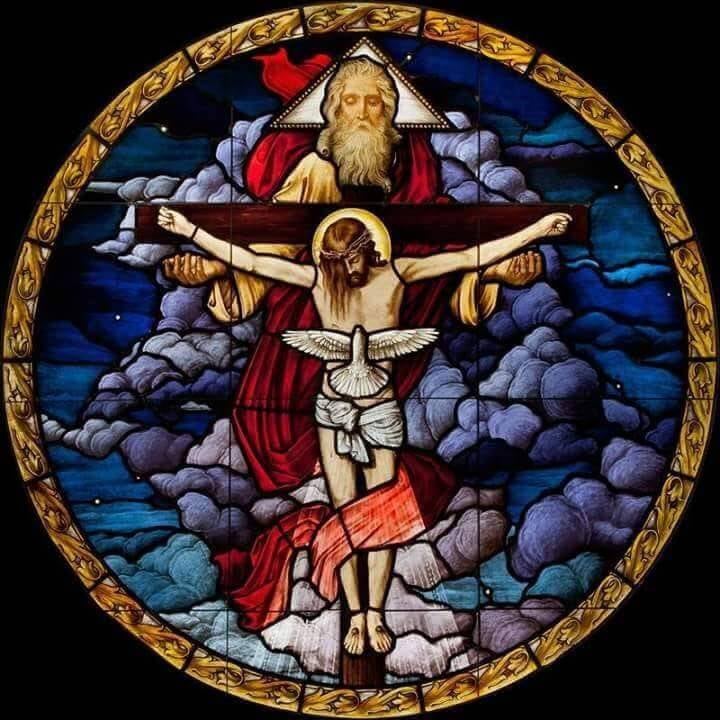
We are all called to be united with reality, and the highest reality that we are made for is God. For every man but especially for the Christian, we are called to grow in likeness to God, and to make of our soul a worthy dwelling place for the Most Holy Trinity. This is done by the process of prayer where we are united to God, or rather God unites himself to us.
LIVING BEYOND THE ORDINARY
God invites a person into His presence, which is a place of intimacy, the Sacred Heart of Christ, where the person can reflect on God.
“It was not you who chose me, but I who chose you” .
It Seeks the Highest Place
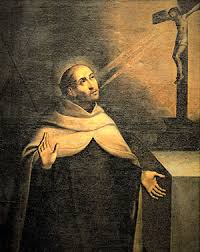
St. John of the Cross continued his commentary on the soul as a bird: “It must hold its beak in the air of the Holy Spirit responding to his inspirations, that by so doing it may become worthy of his company.” As the wind moves through the heavens, going where it wills, so the bird, our soul, is called to move with that wind also.
For a Carmelite, prudence is realized through the exercise of common sense, which the Carmelite Rule calls us to use as a means of evaluating our lives. The virtue of prudence is a way for the soul to avoid things that are not healthy for the growth of stillness in the heart. Prudence, supports the gift of courage, which provides the strengthen for the soul to move towards people and moments where the Spirit’s love desires them to be. This prudent movement of our hearts helps the heart to grow in the love of the Spirit, safeguarding the heart from merely seeking moments of sentimentality to satisfy its own vanity.
It Holds Its Beak in the Air
St. John of the Cross continued his commentary on the soul as a bird: “It must hold its beak in the air of the Holy Spirit responding to his inspirations, that by so doing it may become worthy of his company.” As the wind moves through the heavens, going where it wills, so the bird, our soul, is called to move with that wind also. What does he mean by this image? This trait is a call to prudence. The virtue of prudence is about growing in the ability to see what lies ahead.
For a Carmelite, prudence is realized through the exercise of common sense, which the Carmelite Rule calls us to use as a means of evaluating our lives. The virtue of prudence is a way for the soul to avoid things that are not healthy for the growth of stillness in the heart. Prudence, supports the gift of courage, which provides the strengthen for the soul to move towards people and moments where the Spirit’s love desires them to be. This prudent movement of our hearts helps the heart to grow in the love of the Spirit, safeguarding the heart from merely seeking moments of sentimentality to satisfy its own vanity.
It Tolerates No Other Company
St. John of the Cross wrote that the soul “must rise above passing things, paying no more heed to them than if they did not exist.” Here he refers to the soul as a solitary bird called to be in the heavens with its Lord. Right ordering of one’s life is of the utmost importance in this process, and to gain this perspective, the soul needs the gift of wisdom because, through that gift, a mind can begin to see, appreciate, and move towards the highest place within one’s life.
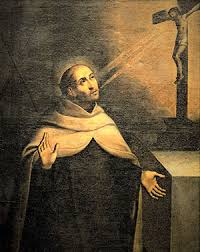
The gift and life of contemplation comes about through an invitation from the Lord. This does not mean that this way of life is for the few. Everyone can create the necessary stillness for contemplation in his heart. Remember, however, that contemplation itself is only possible because “the Son of Man came to seek and save the lost” (Luke 19:10). He, our Lord, always initiates the encounter; He calls us first.
The five traits described above are a way for one to become like the servant whom the master finds doing his will (Matthew 24: 46). The good servant was able to do the will of the master because he had the heart of the master inside of him. The contemplative life is a means of allowing one’s heart to become like that of the Master, Jesus.
Thus, the contemplative, by his very life, makes known the presence of the Master; the servant, through imitation, has become like an icon of the Master. Why imitation? Let us consider the words of St. Paul: “Therefore be imitators of God, as beloved children” (Ephesians 5:1).
For a Carmelite, this call is lived out through the gift of contemplation: a gift freely given by the Lord to all hearts disposed to receiving Him.
The pure and whole work done for God in a pure heart merits a whole kingdom for its owner.
Prayer for Discernment in Vocation
Discerning one’s vocation is a journey of the heart, requiring spiritual reflection, patience, and attentiveness to God’s call. Whether contemplating a religious path, a professional career, or life’s purpose, this prayer seeks guidance from the Holy Spirit to illuminate the way. It encourages believers to align their desires with God’s plan, to listen carefully to divine promptings, and to respond faithfully. Through prayerful discernment, one cultivates clarity, courage, and a deeper understanding of God’s design for their life, fostering obedience, devotion, and trust in His perfect will.
Lord, open my heart and mind to Your calling. Help me recognize the path. You have prepared for me and granted me the courage to follow it faithfully. Illuminate the choices before me with Your light and guide my steps according to Your will. Strengthen my faith as I seek Your wisdom and grant me patience while awaiting Your direction. May my decisions reflect obedience to You, and may I embrace the vocation. You desire me with joy, humility, and love. Lead me, Lord, in every moment of discernment.
Amen.
What are the vows that Carmelites make?
The living of the Vows is meant to lead to a life of deep virtue. Each of the three vows the Carmelite Sisters take leads to a deeper life of lived virtue so that she can not only grow in holiness, but also become more and more united and conformed to their Spouse, Jesus Christ.
-
The Vow of Poverty: claiming nothing as one’s own; to be completely dependent on community to supply for all one’s needs. This vow leads to the virtue of poverty of spirit, trusting completely in Divine Providence, in the Father’s love and care. It also fosters the theological virtue of hope.
-
The Vow of Chastity: giving oneself wholly to God alone; in choosing to remain perpetually celibate, consecrated chastity opens the heart to all in our spiritual motherhood and being totally available to do the work necessary in our community. This vow leads to the virtue of totality and loving kindness, which reflects Mary’s tenderness. It also fosters the theological virtue of love.
-
The Vow of Obedience: an offering of our will, freely given, to enter into the mystery of our Lord’s total self-gift and to unite our heart and mind with that of our Lord’s through our Superior and the Church. This vow leads to the virtue of humility and trust that our Lord speaks through our Superiors and through the Church. It also fosters the theological virtue of faith.